You push,
it ships.
The PaaS experience on your own Kubernetes — open source, GitOps-native, and built on proven CNCF tooling. Simple enough for a platform team of two.
The PaaS experience on your own Kubernetes — open source, GitOps-native, and built on proven CNCF tooling. Simple enough for a platform team of two.
The golden path, standing on the shoulders of CNCF projects
Every pull request gets a live preview; every merge ships itself. Ideas reach users the same day they're written — with production safely gated behind one click.
Runs on your clusters, stores its state in your git repos, and builds on open CNCF standards. No per-seat pricing — and leaving means keeping everything, as plain Helm and git.
The golden paths an internal platform team would spend a year building — installed in an afternoon, operated by one or two people.
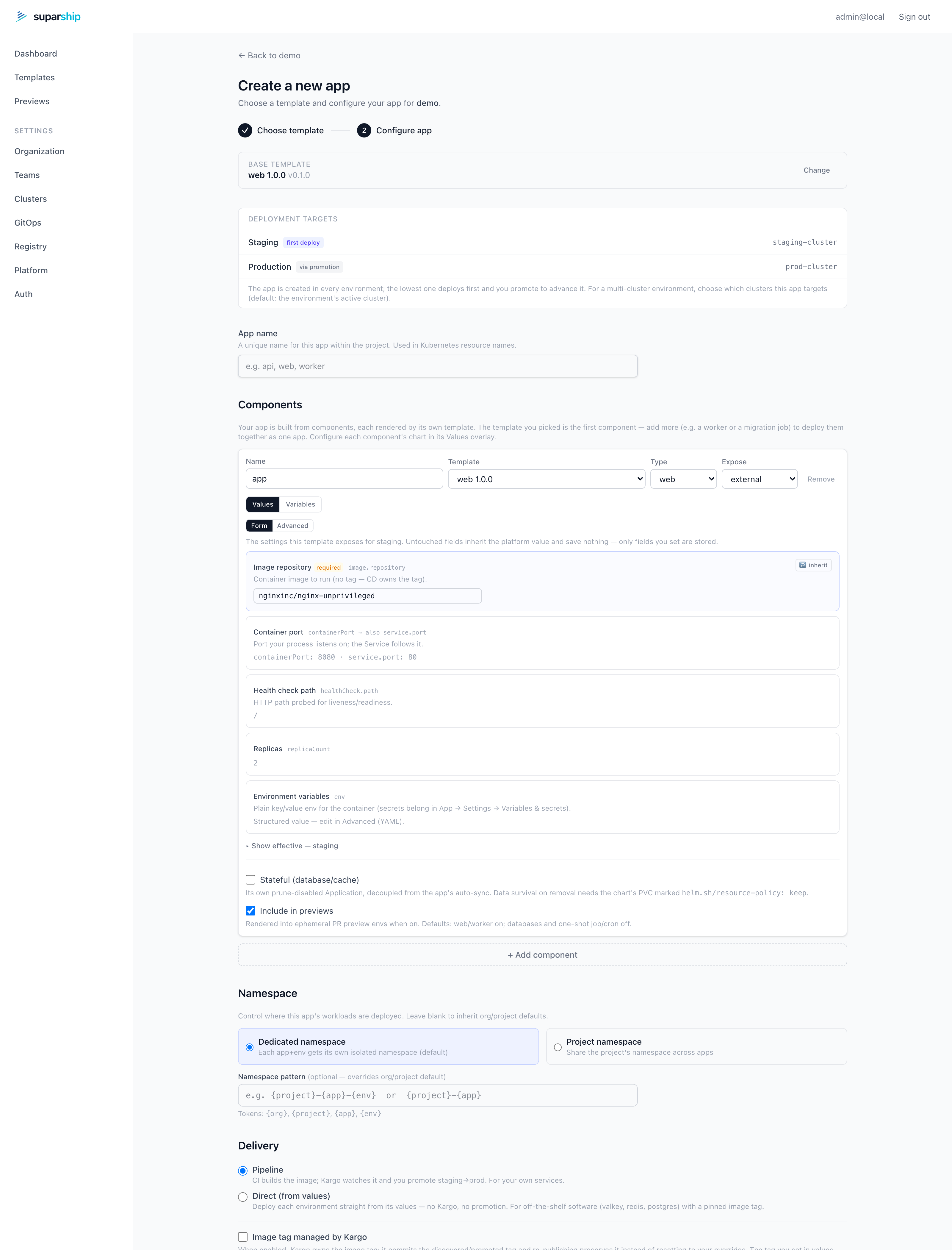
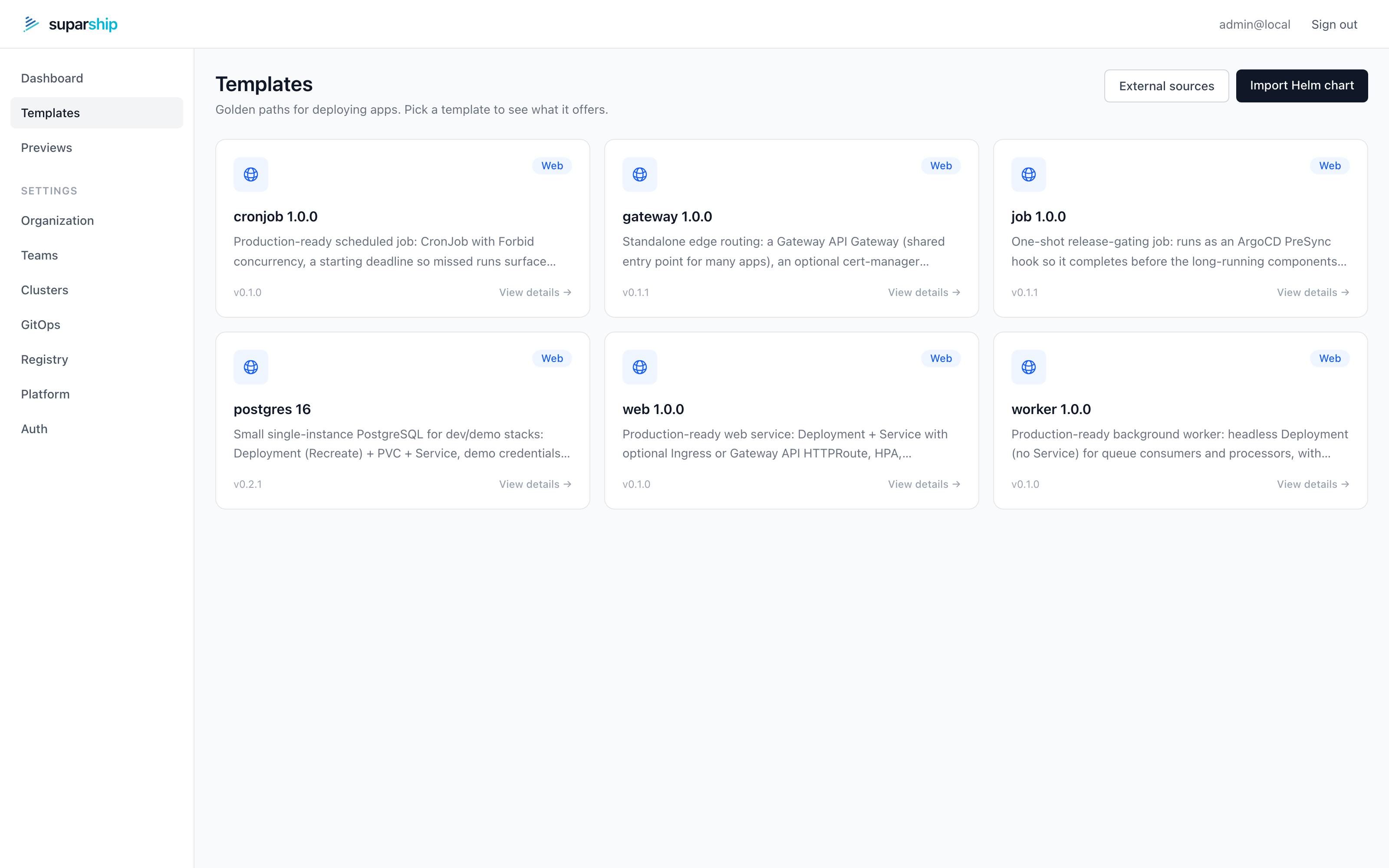
No golden-cage templates. Any chart from any registry is a suparship app — the platform contract is just a handful of ((platform.*)) tokens and rendered env objects.
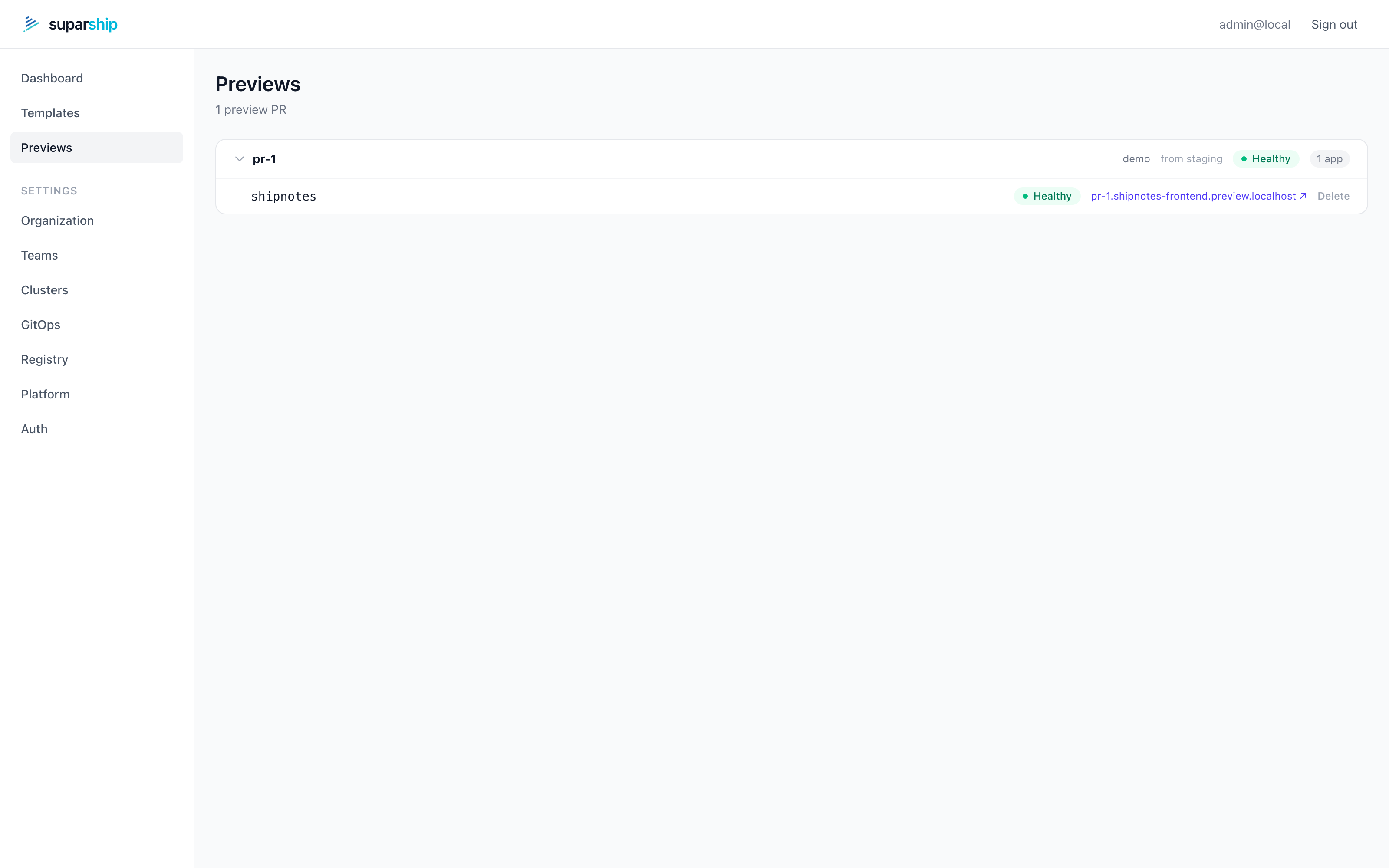
Every pull request gets its own environment with its own URL, built at the PR's image tag and torn down on merge. Composed apps preview all components together.
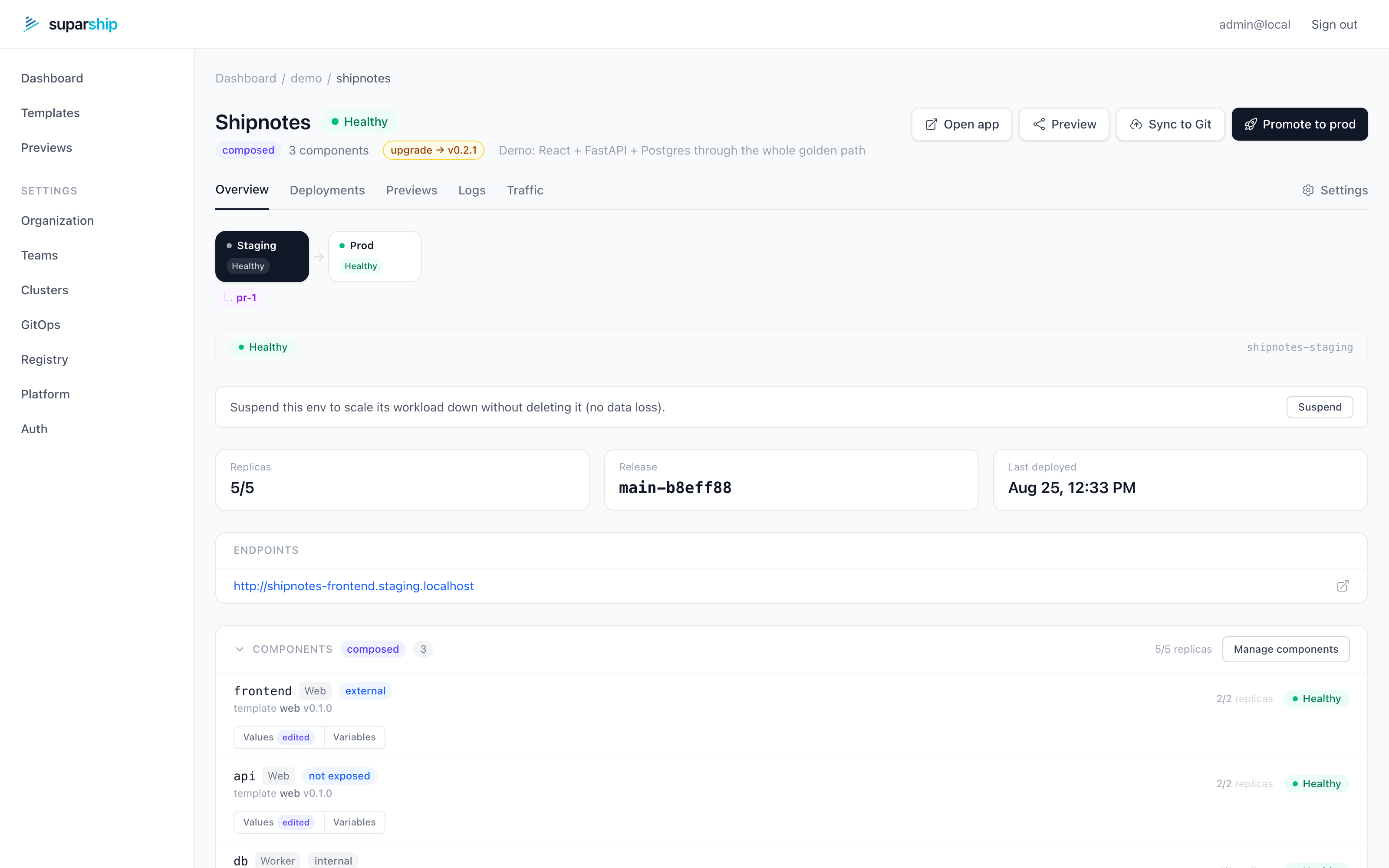
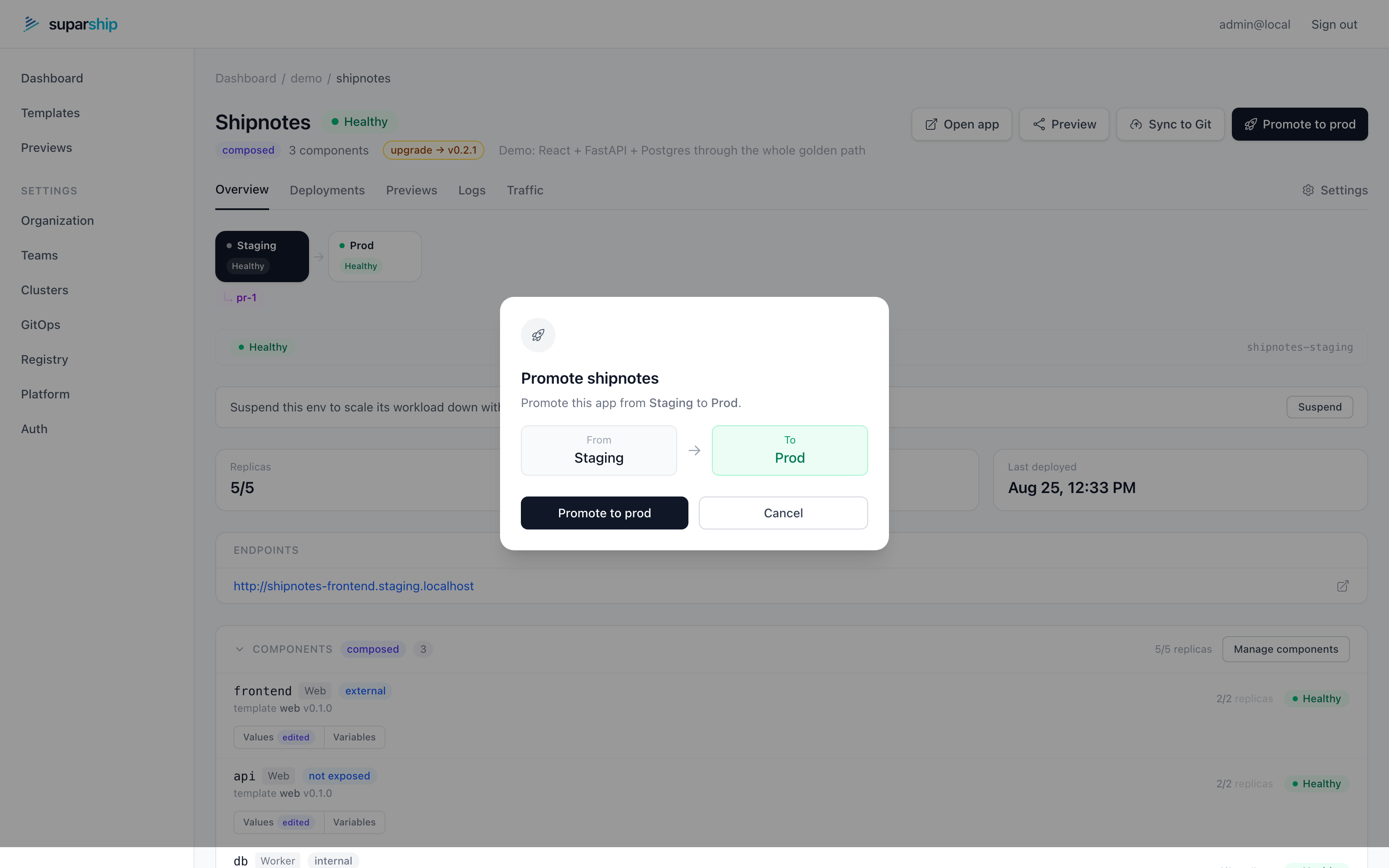
Merge to ship staging; one click for prod. Kargo drives the pipeline, each stage gated on the health of the one before — and rollback is one click too.
Everything suparship does is a commit to your gitops repo, synced by Argo CD. Nothing hidden, nothing imperative — the audit trail is git log.
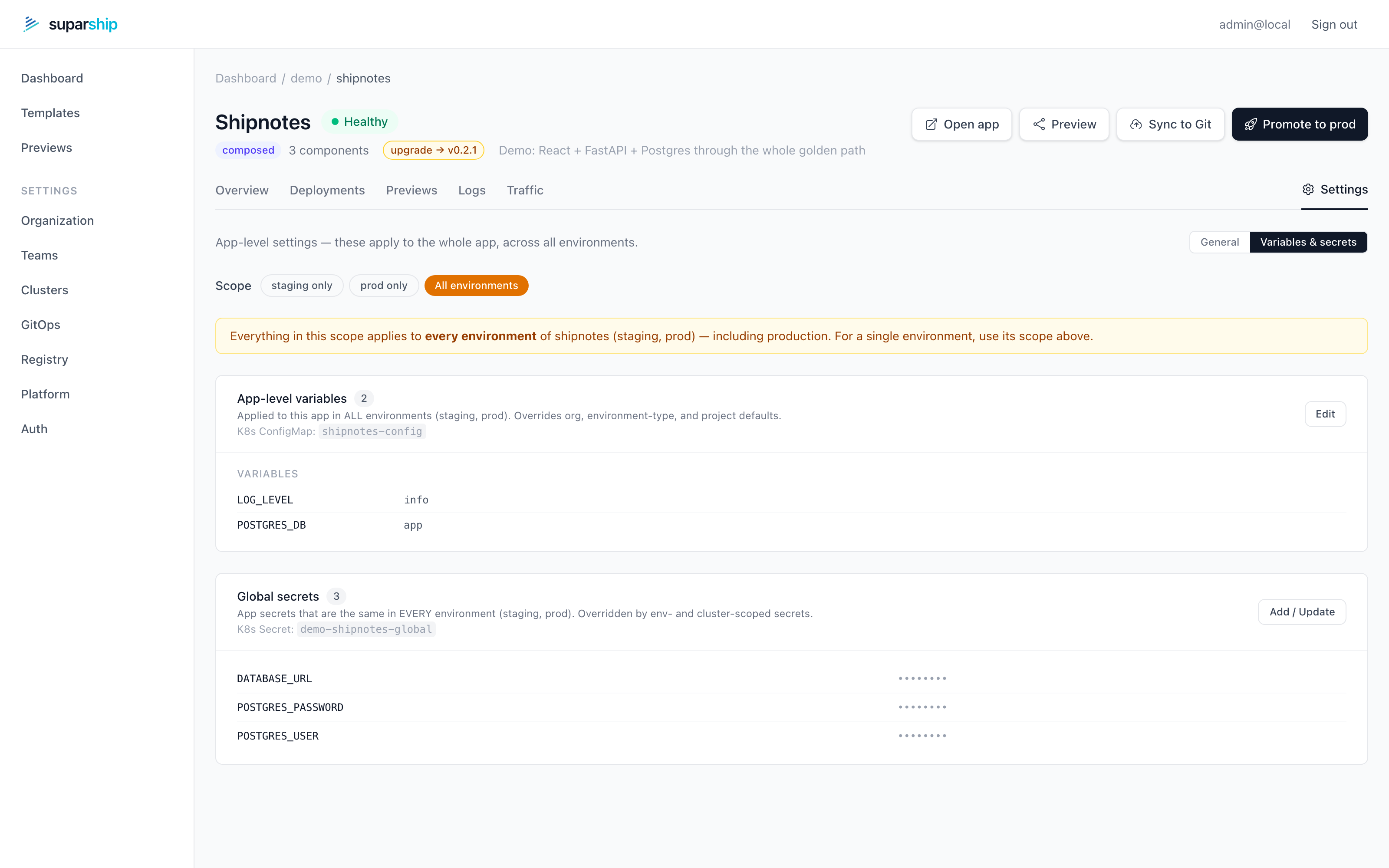
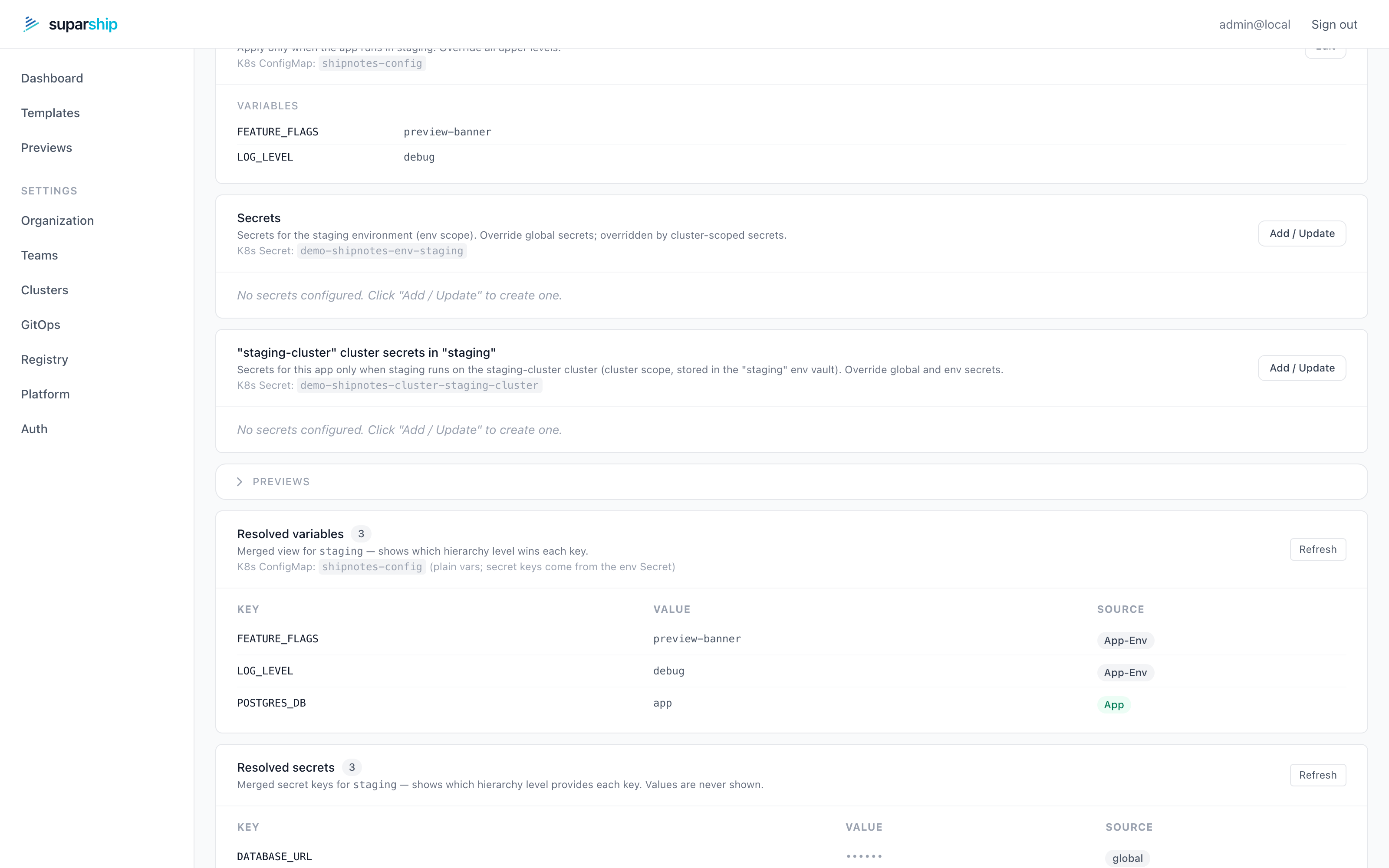
HashiCorp Vault or 1Password as the backend; per-cluster read tokens sealed with sealed-secrets and delivered by External Secrets. Developers just name a variable.
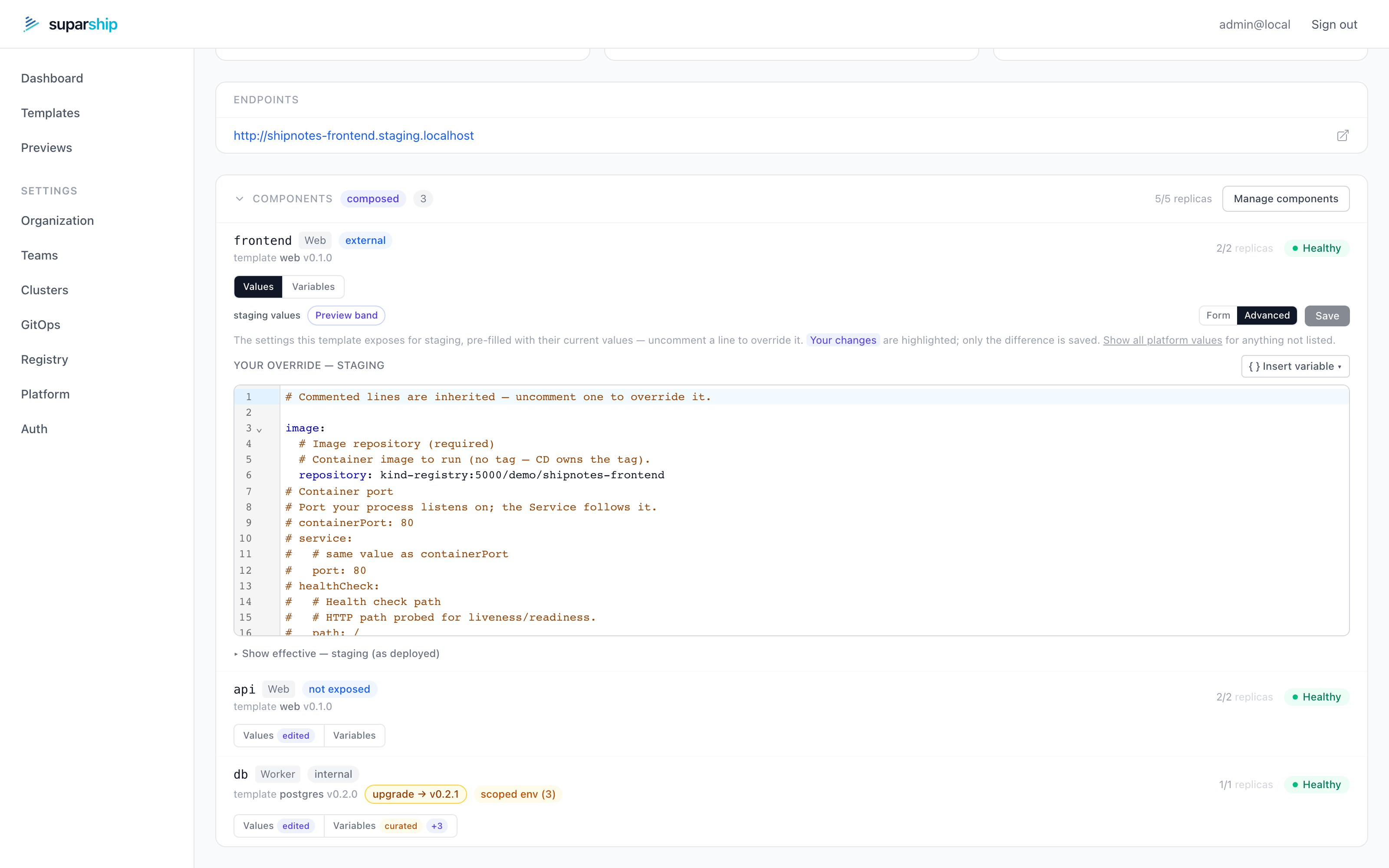
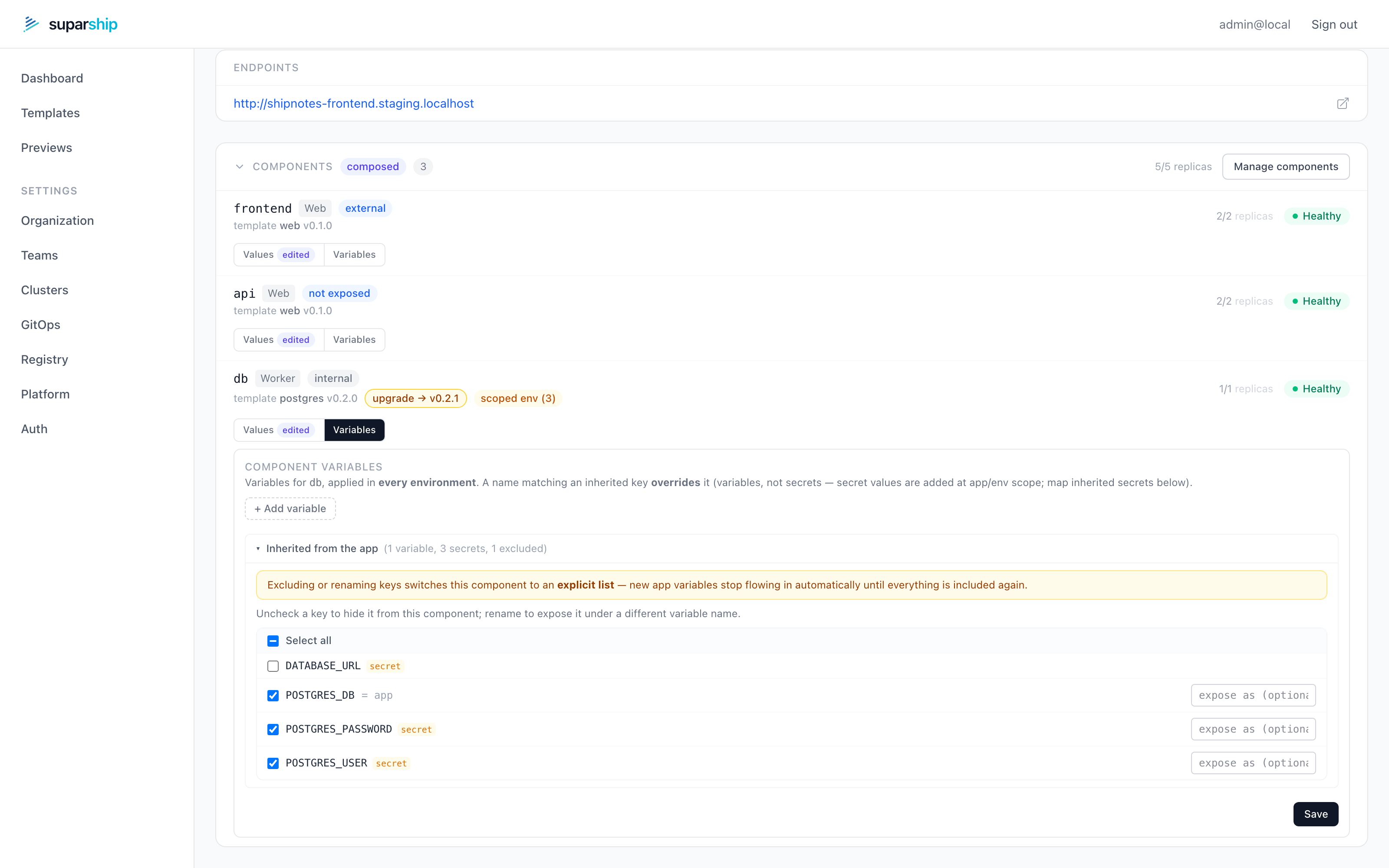
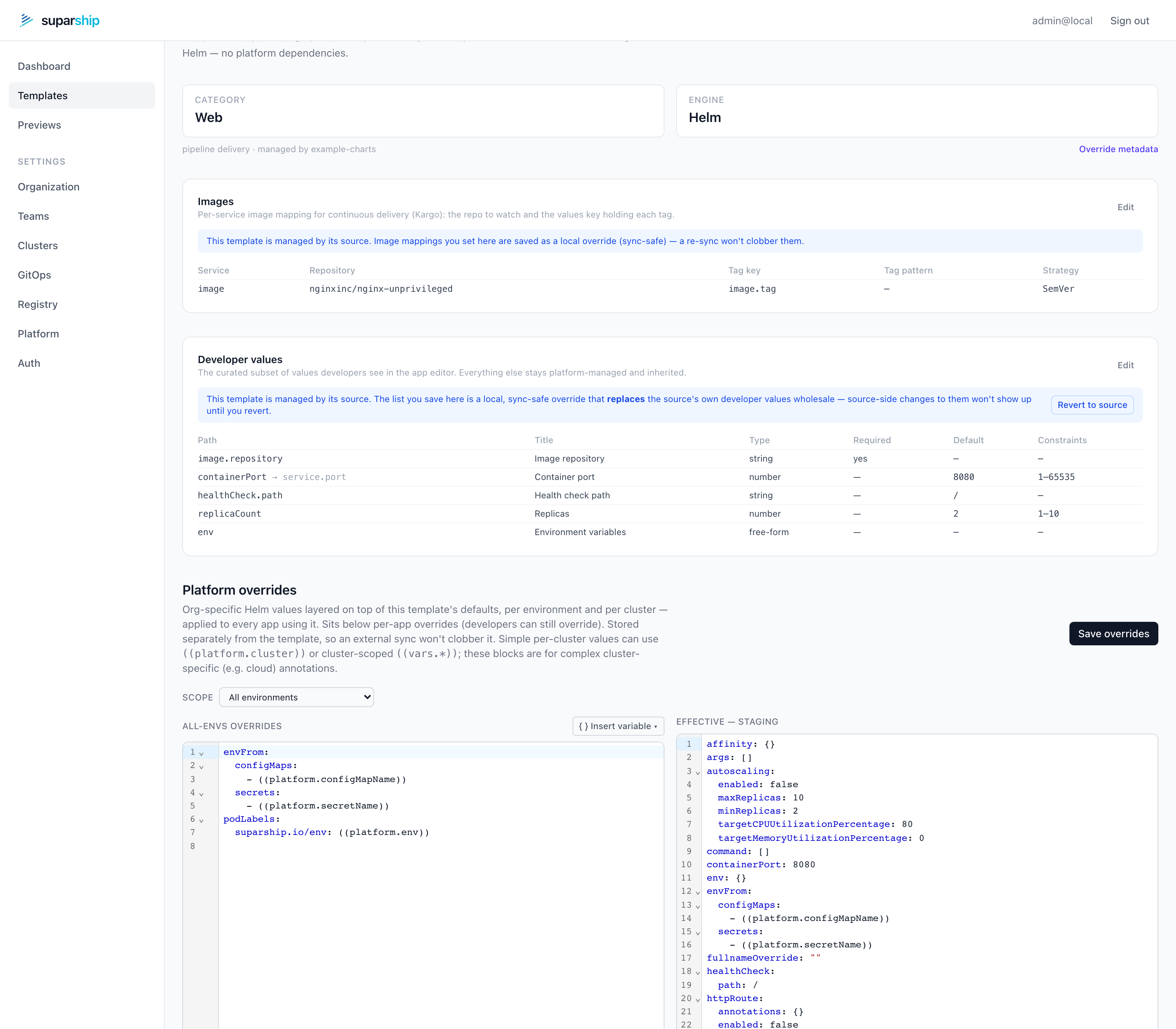
Platform engineers curate which values developers see; devs get a clean form and env-scoped variables — no YAML spelunking, and the chart underneath stays plain, unmodified Helm.
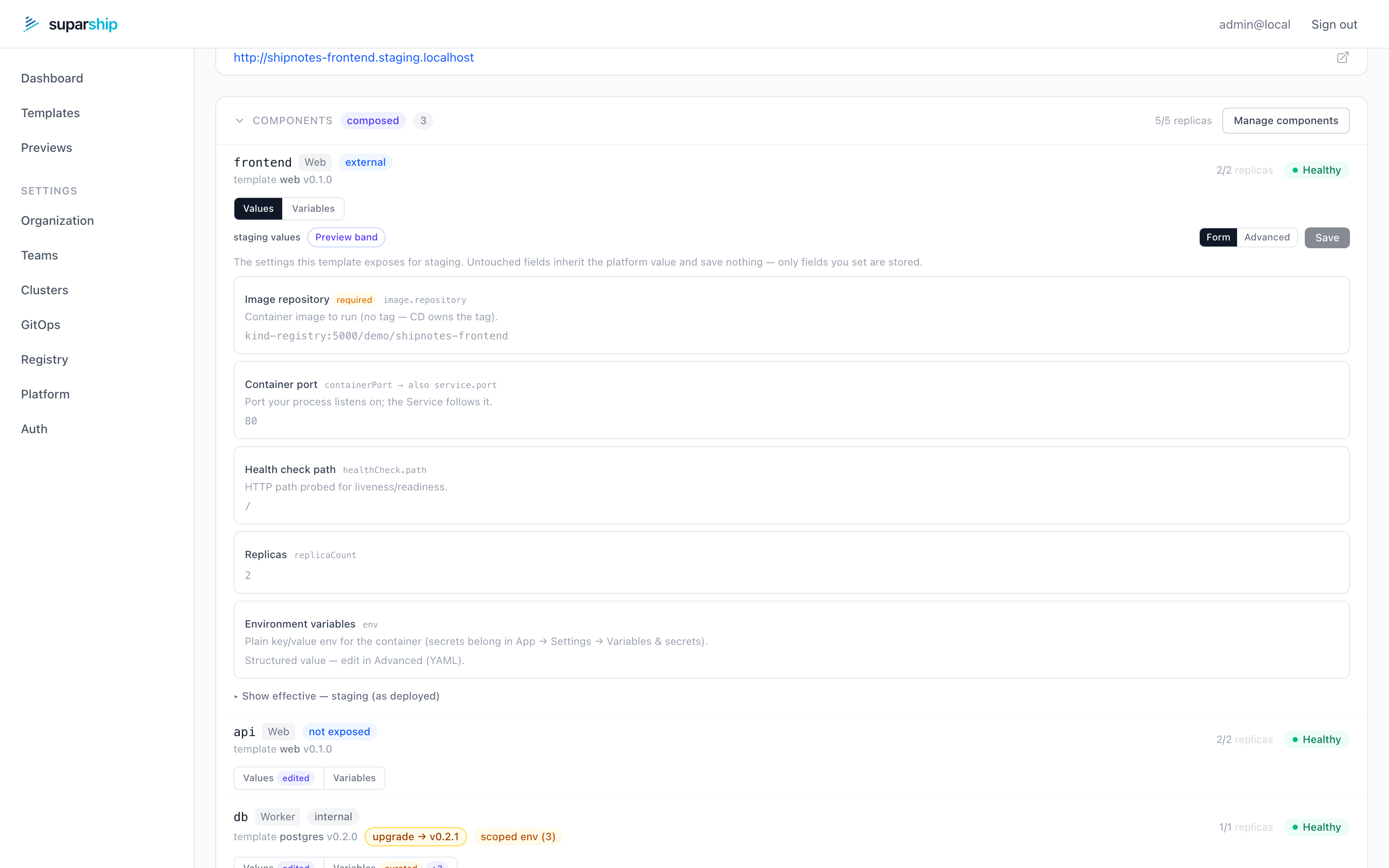
From the one-command demo: a React + FastAPI + Postgres app through the whole golden path.
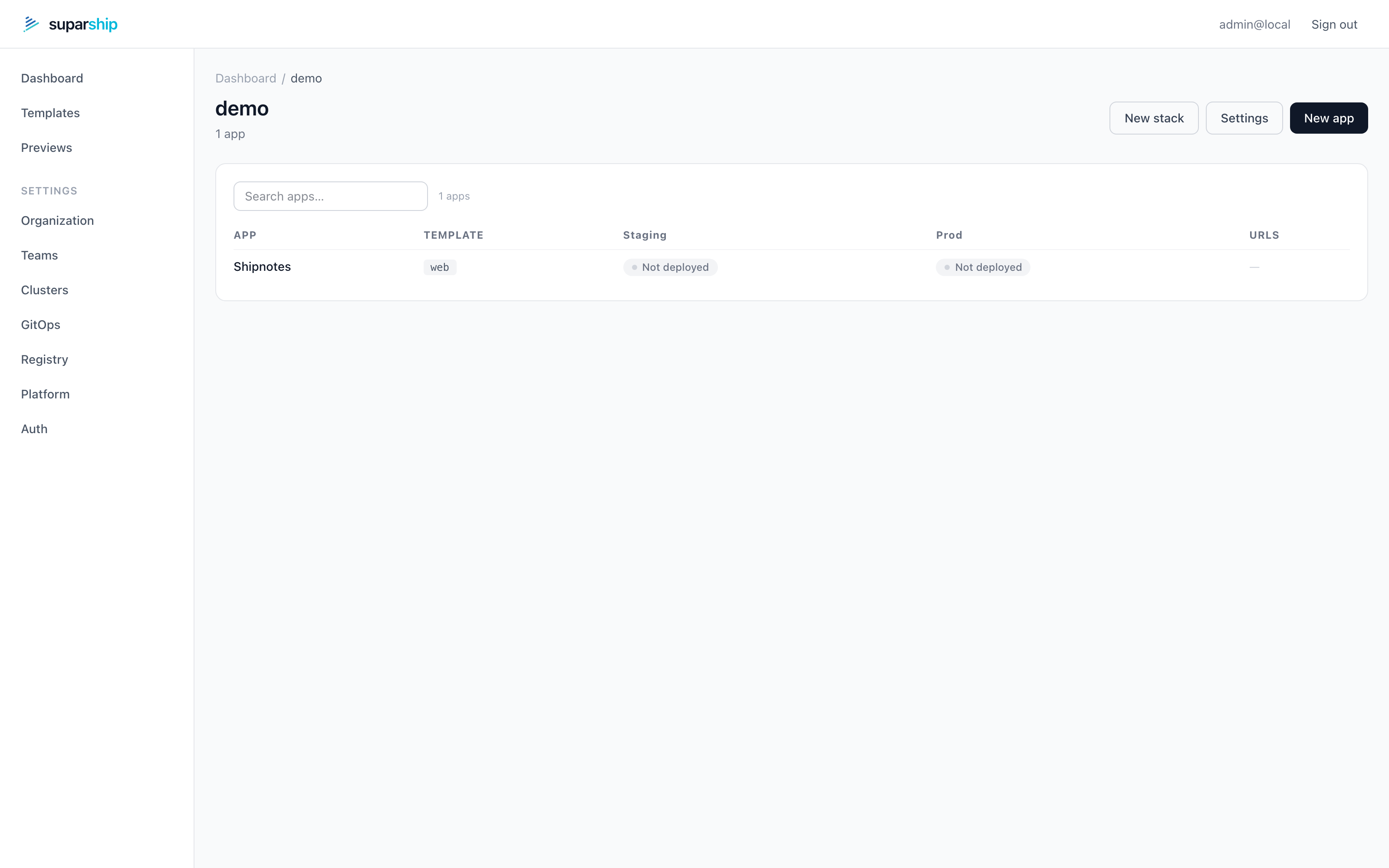
kubectl requiredOne Helm install on a cluster with Argo CD + Kargo. Connect the gitops repo, registry, and secrets backend in the UI — then commit the sealed export to git.
Bring the org's Helm charts — or any public chart — into the template registry. Layer platform, environment, and cluster defaults on top, and choose exactly which values developers see.
Developers create apps from those templates, fill in the curated values and secrets, and push code. PRs get previews, merges reach staging, and prod is one gated click away.
No cluster needed for a first look — the demo mode runs everything in-process. Or bring up a full local platform (GitOps, CI, previews, promotion) on a kind cluster.
Read the guided tour →# quick look — no cluster required
$ git clone https://github.com/suparcloud/suparship
$ cd suparship && cp .env.example .env
$ task dev
→ http://localhost:5173 (admin@local / admin123)
# the real thing — local kind cluster, end to end
$ task up && task demo:shipnotes